World of Dice
Prototype of the game world of dice implemented in Tabletop Simulator.
Project Snapshot
I am designing a competitive multiplayer strategy board game that combines territory control, comparison-based dice combat, asymmetric player options, PvE-style threats and multiple paths to victory.
The game currently exists as a playable physical prototype with custom maps, player boards, faction sheets, dice progression, event tiles, shops, relics, monsters and boss encounters. The current focus is iteration, balancing, complexity reduction and improving replayability.
The project started from my interest in board games such as Risk, The Legends of Andor and Catan. Instead of copying these games, I wanted to explore how specific mechanics I enjoy — such as comparison-based dice combat, varied dice systems, hero-like units, event tiles, boss encounters and victory-point progression — could work together in a new competitive strategy game.
The goal is to create a game that feels more varied and strategic than a classic territory-control game, while remaining more accessible than heavier adventure or role-playing-style games.
Important: Prototype visuals use placeholder art and components. The focus of this project is system design, rules, mechanics and balancing.
What This Project Shows
- Game systems design
- Physical board game prototyping
- Combat mechanics and faction design
- Iteration based on design problems
- Complexity management
- Balancing and replayability thinking
Visual Overview
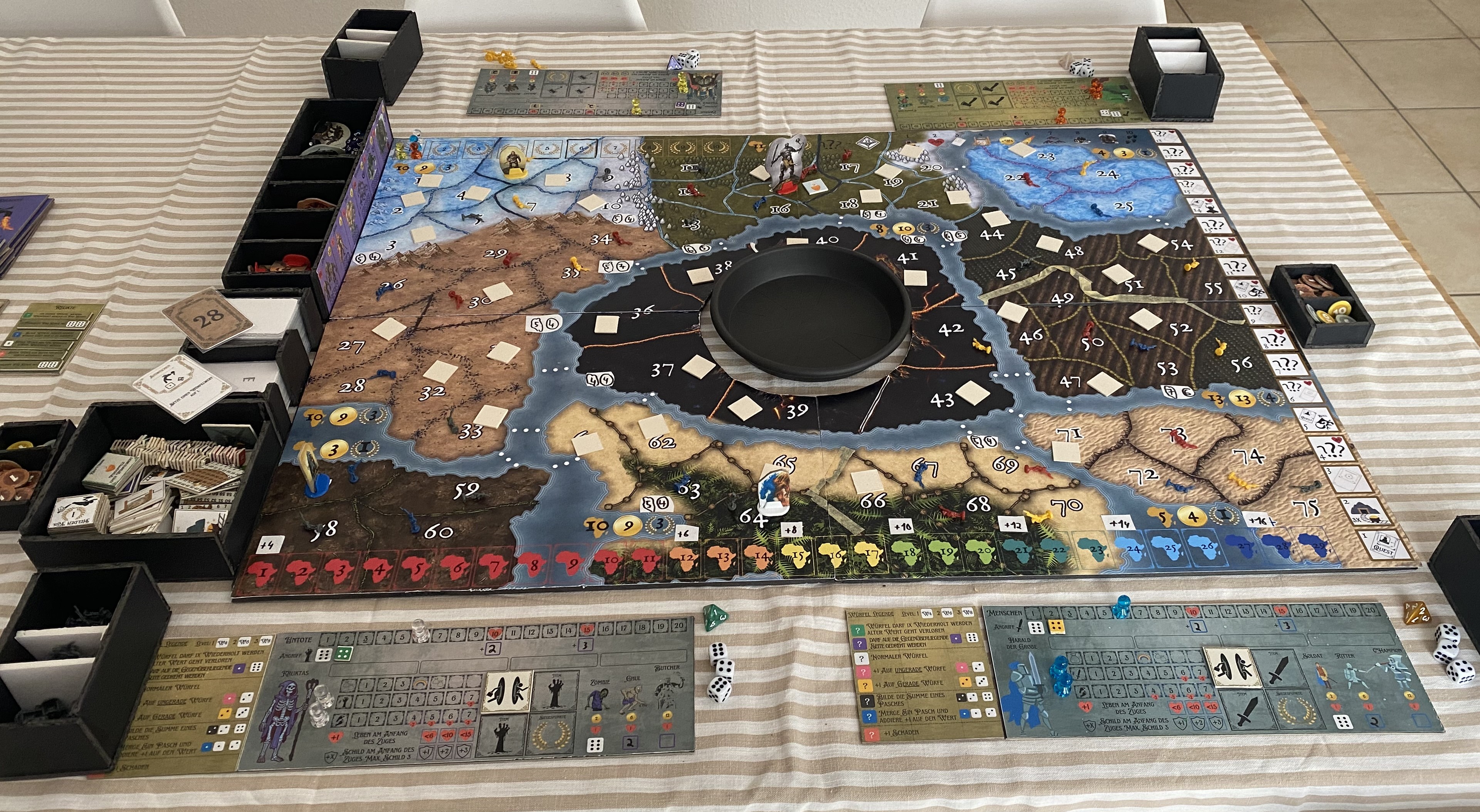
Overview of the game with starting setup.
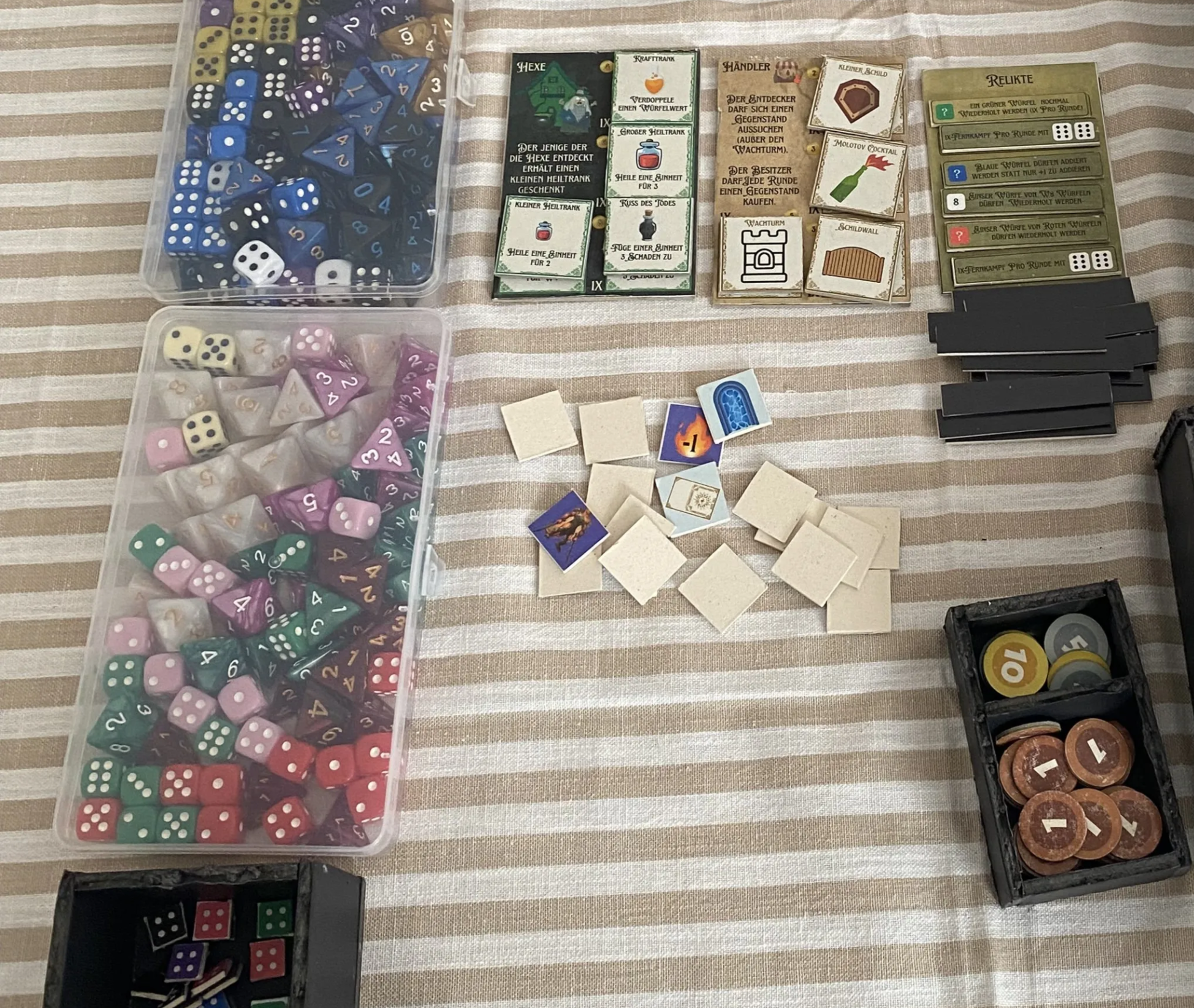
Different dice, dice runes, shops, relics, gold box and fog tiles that trigger different events.
Design Goals
The core design goal is to create meaningful strategic decisions without making the game unnecessarily complex. Players should be able to interact through map control and conflict, develop different playstyles and pursue multiple paths to victory.
Instead of relying only on conquest, the game uses victory points and progression systems. This is intended to avoid situations where players mostly stack units, wait for one decisive moment and then win through a single large attack while others mostly watch.
Key Goals
- Preserve the tension of comparison-based dice combat
- Expand Risk-like combat with more varied dice mechanics
- Create different playstyles through factions, classes and unit progression
- Add PvE-style threats such as monsters and bosses to create additional map pressure
- Support multiple paths to victory through victory points
- Keep the game understandable despite added strategic depth
Core Systems
The current design includes:
- Competitive multiplayer map control
- Comparison-based dice combat
- Multiple dice types and combat effects
- Factions with different identities and properties
- Classes, talents or upgrade paths
- Hero-like units that can carry items or relics
- Neutral monsters and boss encounters
- Event or fog tiles that create uncertainty during exploration
- Victory points and multiple ways to win
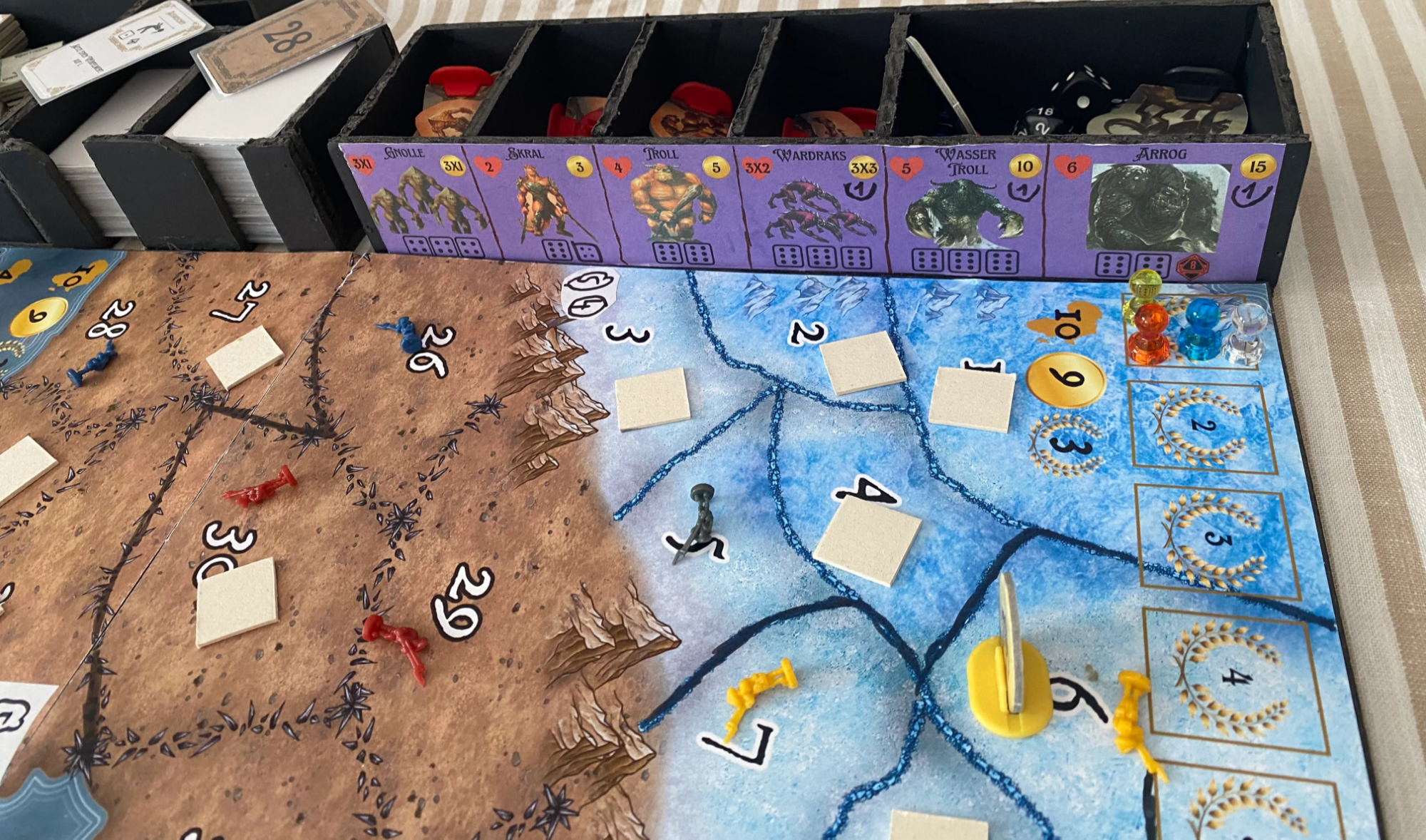
PvE monster table.
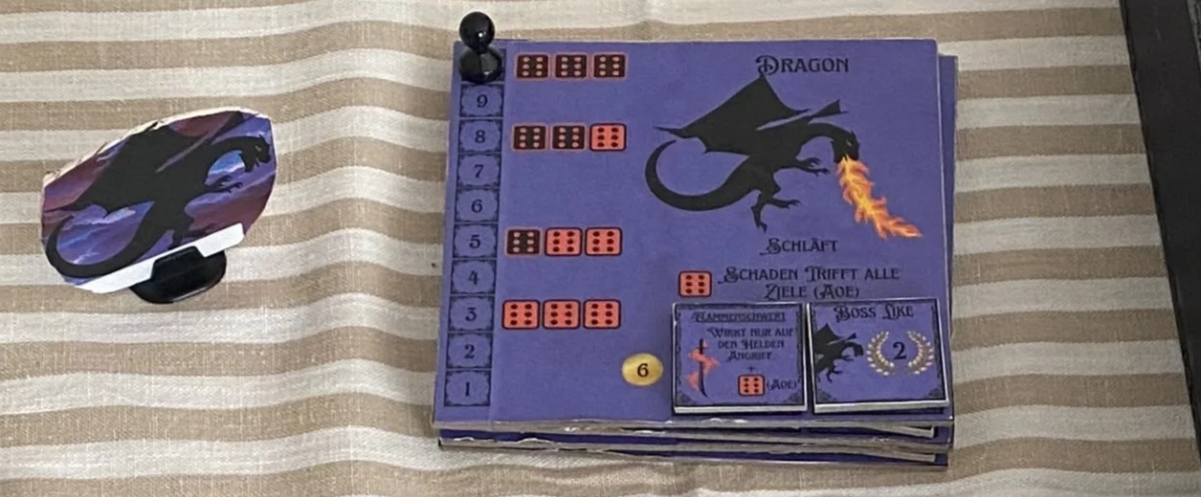
Dragon boss plate with rewards.
Key Iteration: Faction Identity vs. Player Freedom
During development, I tested different approaches to faction identity and dice progression.
One version gave each faction fixed dice mechanics. This created strong faction identity, but also limited player freedom because each faction was locked into one main playstyle.
Another version allowed players to collect and upgrade different dice during the game, in which each die color has a special effect, for example green dice enabling rerolls. This created more variety and made each session feel more different, almost like a roguelike-style progression system.
However, it also increased complexity and reduced the uniqueness of the factions, because player identity shifted more toward collected dice combinations.
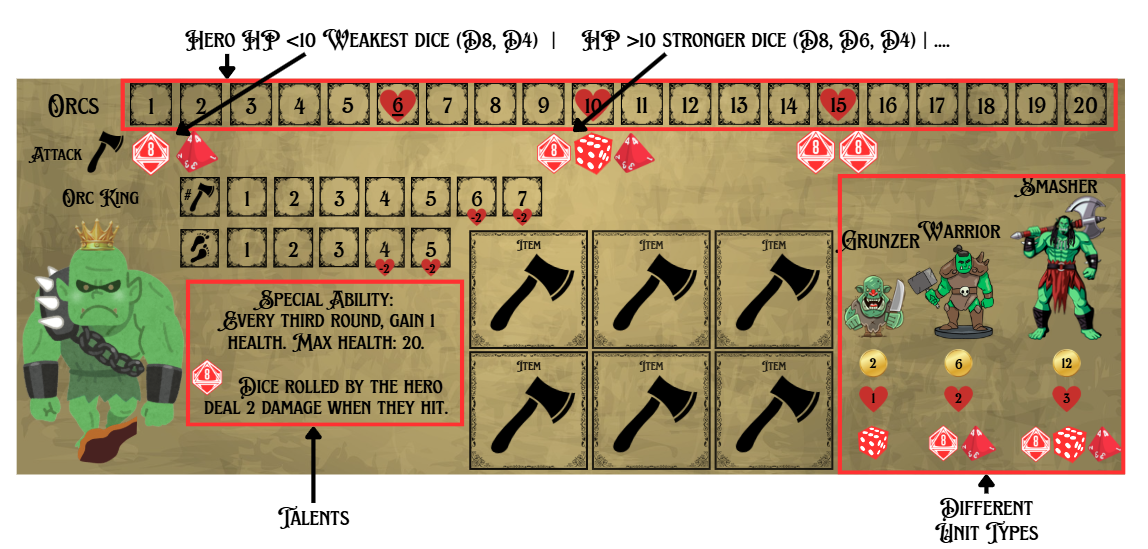
Orc faction board with hero health, talents, unit types, dice progression and special abilities.
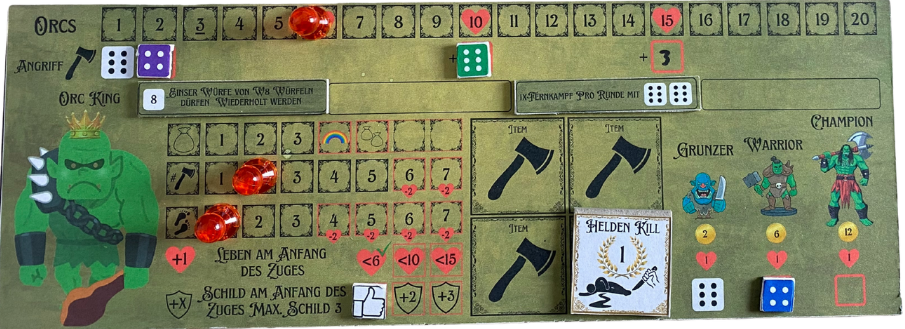
Dice effects and player board layout used to support faction identity, progression and combat readability.
Key Iteration: Map Size and Player Interaction
I also experimented with map size and starting conditions. One issue I noticed was that a map that is too large for the player count can reduce interaction.
Players could expand, collect points and progress without engaging with each other enough, which made the game feel more like a race than a conflict-driven strategy game.
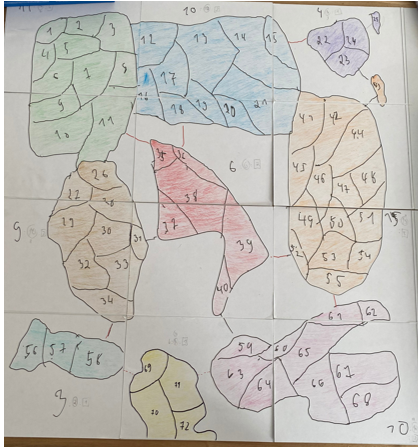
First prototype map with early area and continent structures.
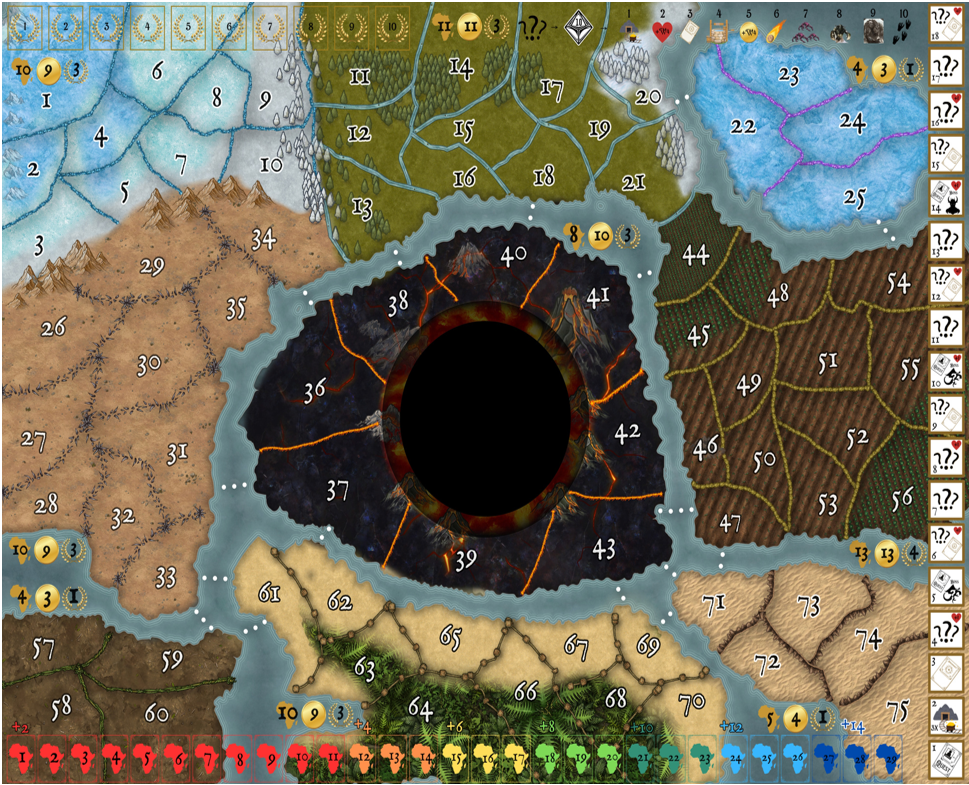
Second prototype map created in Inkarnate, including victory-point tracking and a storyteller/event track.
Current Challenges
The game is playable and already shows promising elements, especially through the dice-collection system. At the same time, the current version is still too complex in some areas.
The next design goals are to reduce unnecessary complexity, improve pacing, increase player interaction and strengthen replayability.
Current Design Challenges
- Balancing faction identity against player freedom
- Making dice variety meaningful without overwhelming players
- Keeping turns short enough to avoid downtime
- Ensuring that map size creates enough interaction
- Keeping multiple victory paths viable
- Improving the “let’s play again” feeling
What I Learned
This project taught me to balance preparation with prototyping. Too little planning creates confusion, but too much planning can prevent progress.
I also learned practical board game design considerations that I had not fully considered at the beginning, such as table size, shared dice visibility, clear rule references, turn length, setup time, transportation and physical usability.
Most importantly, the project showed me how closely game design, balancing, player experience and technical analysis can be connected.
Link to Master’s Thesis
While developing the board game, I realized that the expanded combat system could no longer be balanced reliably through intuition alone. Different dice types, faction effects, classes and relics created interactions that were difficult to compare manually.
This design problem became the starting point for my master’s thesis, where I developed a simulation framework to analyze and compare extended Risk-like combat mechanics more systematically.
Related project: Combat Balancing Simulation Framework
Additional Prototype Photo
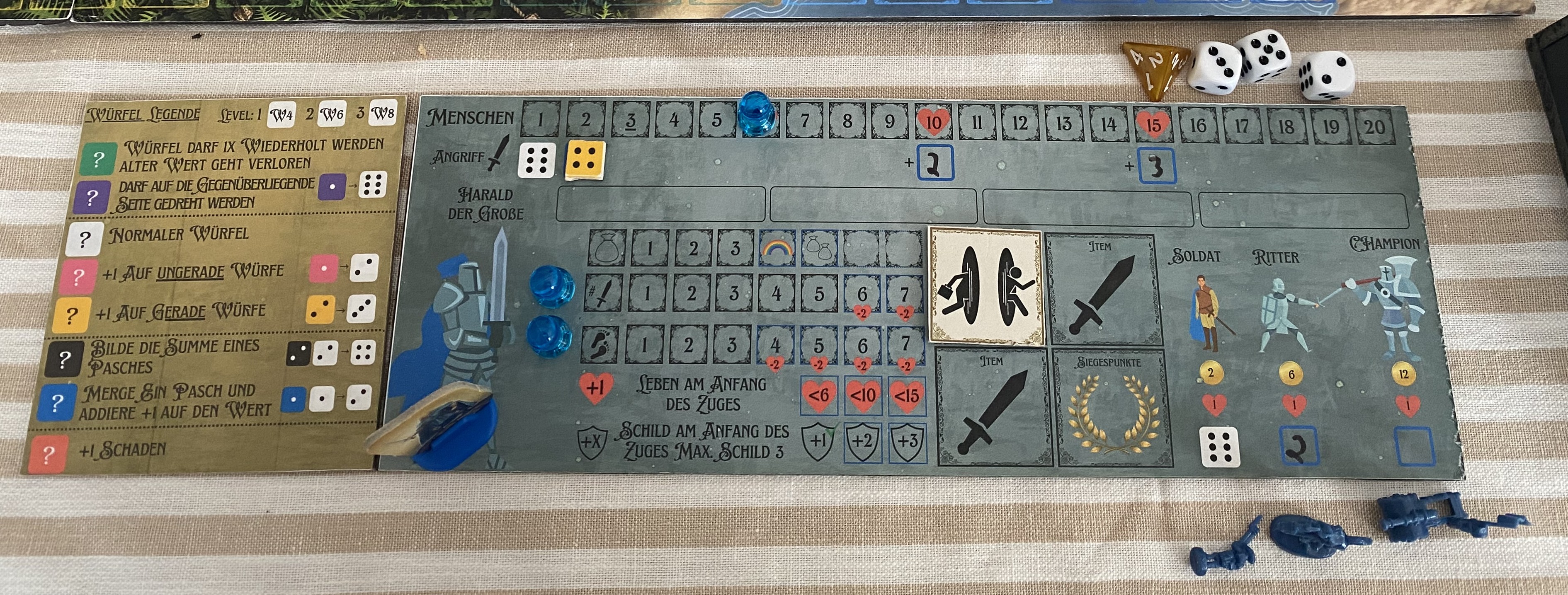
Dice legend and human faction player plate.
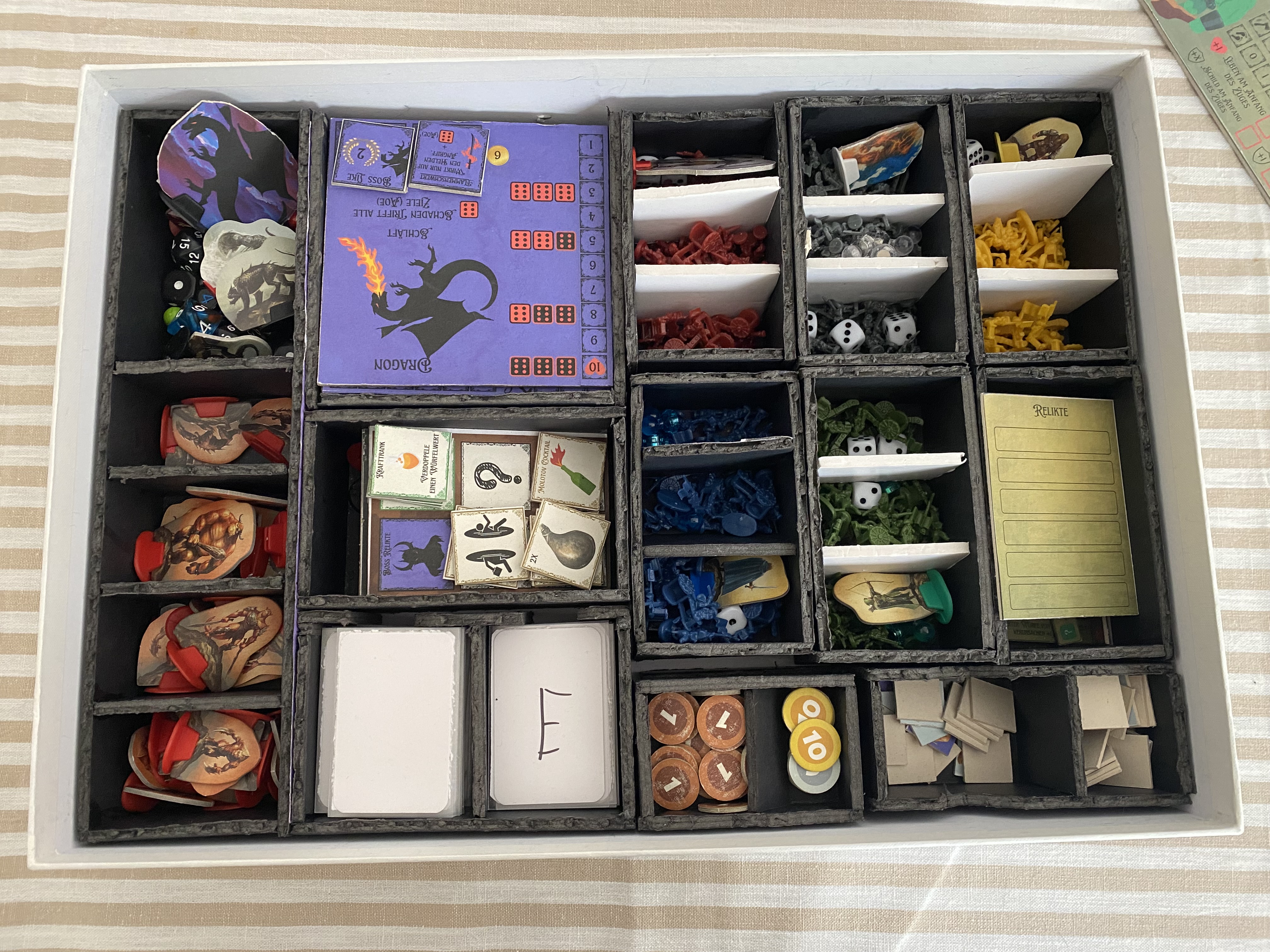
Custom box insert for organizing the physical prototype and improving playtest setup.
Prototype asset note: Some visual elements in early physical playtest materials use licensed or temporary placeholder graphics and are not part of a commercial release.